
Happily
- B2B
Event Marketplace Experience
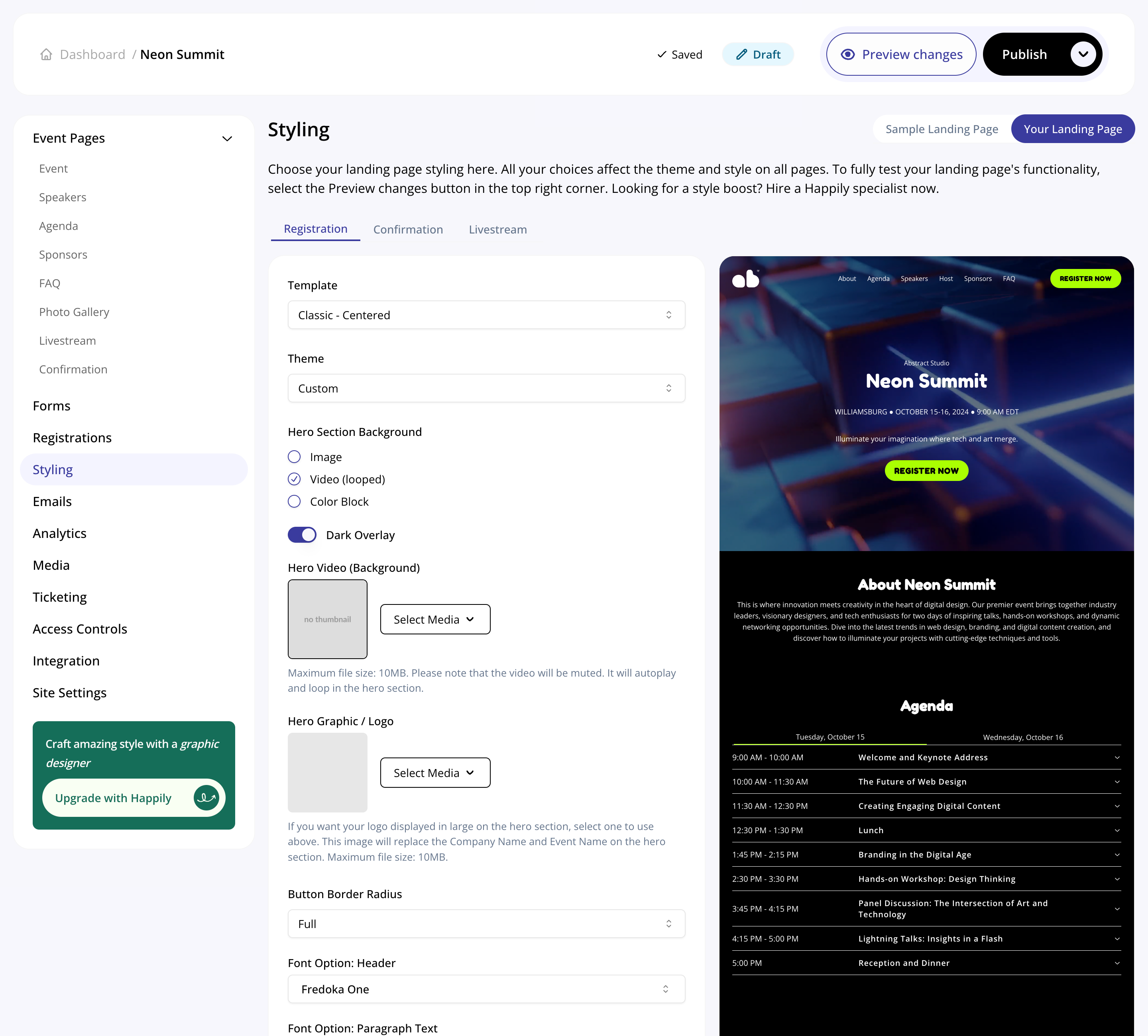
Launching the client facing platform, creates a streamlined marketplace experience for hiring top-tier event production freelancers. The focus was on intuitive navigation, clear communication, and showcasing specialist profiles in a way that builds trust and simplifies hiring.
ROLE
Product Designer
DURATION
1 month (research to shipped)

The Problem
How might we streamline the hiring experience for clients so they can confidently find, assess, and book event specialists—whether it’s their first time or their fiftieth??
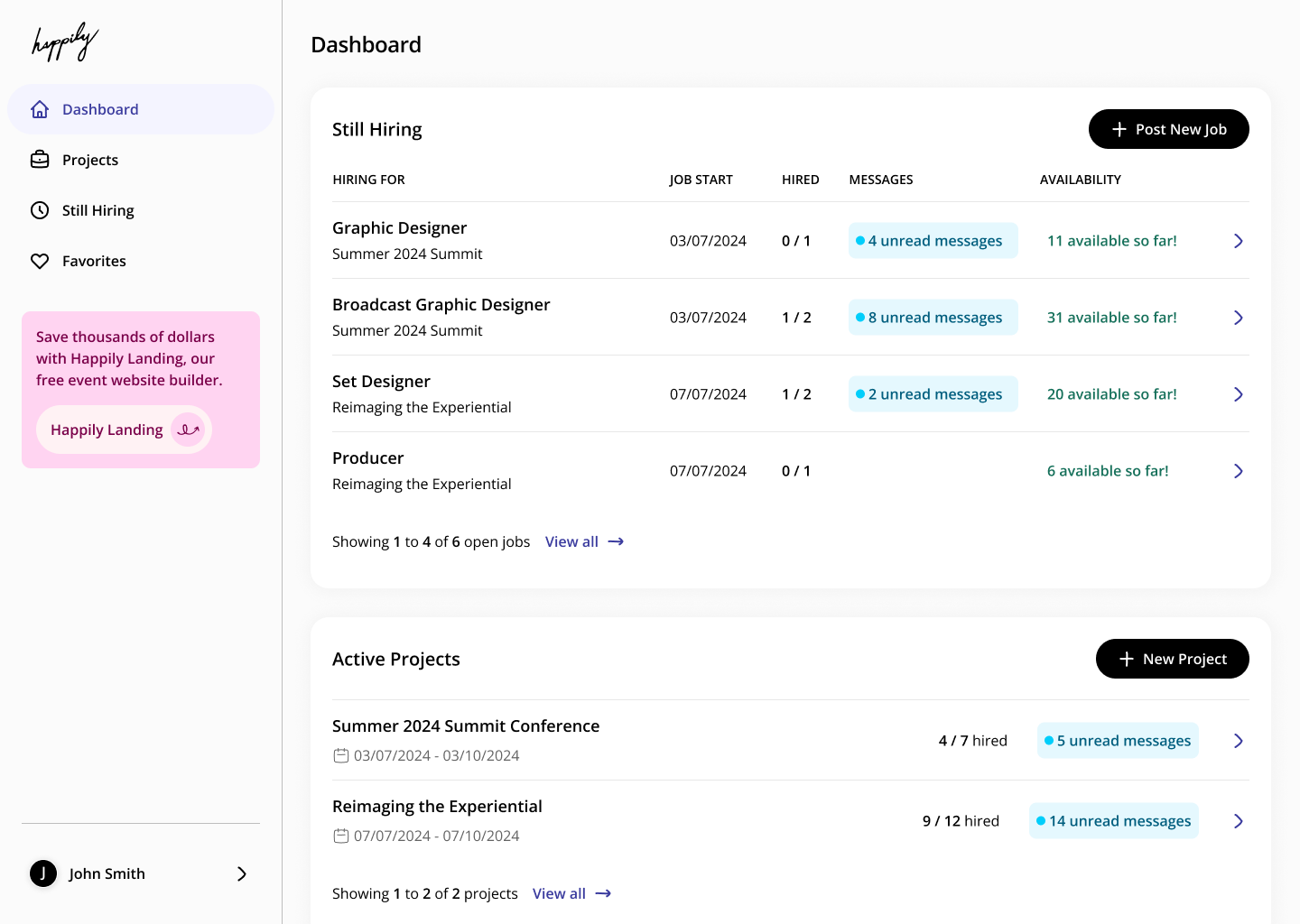
Happily’s agency have been hiring freelancers for their client’s events, with a lot of back and forth, that hiring for live events became fast-paced and high stakes. Event producers or clients themselves needed a way to:
- Quickly browse and filter vetted talent
- Understand specialists’ skills and availability at a glance
- Maintain clear, consistent communication throughout onboarding
The Solution
The Appily platform empowers event personale by:
- Making specialist profiles easy to compare and filter
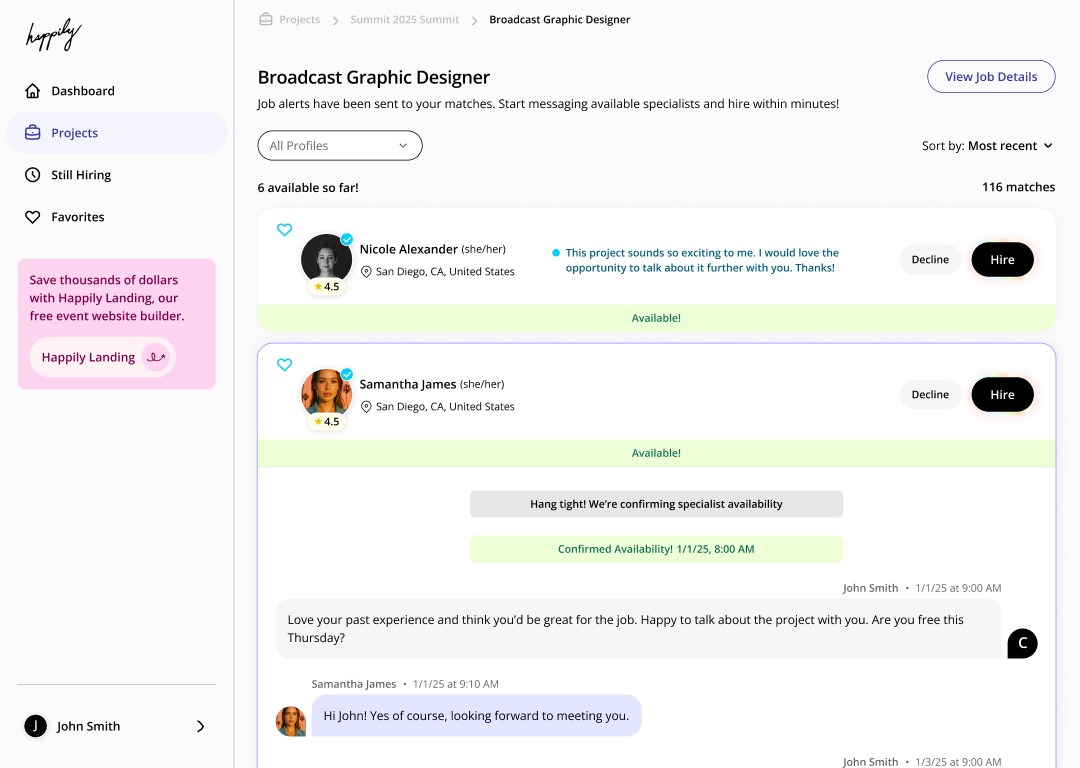
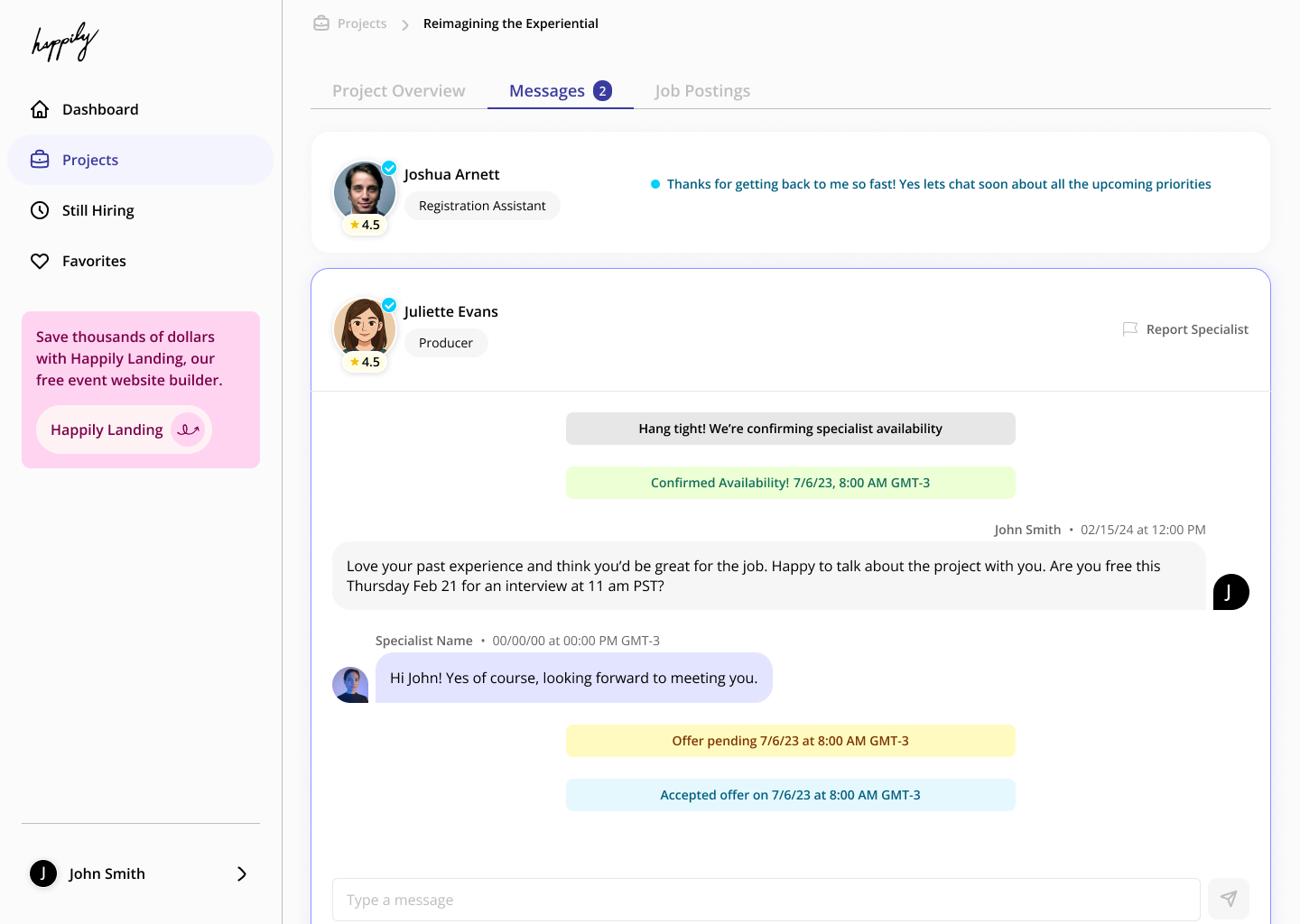
- Offering real-time messaging and hiring tools in one dashboard
- Elevating trust with reviews, experience tags, and availability indicators
Research & Discovery

Jordan Whitaker
Senior Producer
“I need someone reliable and fast. But finding that person shouldn’t take days.”

Evett Rue
Event Director
“I don’t want to use email and Slack and Calendly—I just want one place to manage my people.”
THE GOAL
This research shaped the the focus of the MVP to have streamline hiring with transparency and built-in trust.
Design Process
These high-fidelity wireframes underwent multiple iterations informed by usability testing and internal reviews. Prior to this stage, the process included stakeholder interviews to uncover key business opportunities, user interviews to deeply understand hiring needs and current workflows, and the development of journey maps, user flows, and low-fidelity sketches. We also incorporated competitive analysis and accessibility considerations to ensure the feature aligns with both user expectations and broader product goals.
Challenges & Constraints
- Balancing the Hiring Styles of Different Users
- Challenge: Designing a hiring flow that works for both repeat and one-time users.
- Solution: We addressed this creating a flexible flow with shortcuts for return users and clearer onboarding for first-timers.
- Prioritization of Key Information
- Challenge: Producers often need to hire a handful of freelancers, fast and need a good assestment at first glance. We needed to balance the specialists’ visibility with client’s needs because too much information can be overwhelming and lead to abandonment.
- Solution: Prioritized key details (skills, availability, reviews) with progressive disclosure—allowing users to dive deeper only when needed.
- Time and Resource Constraints
- Challenge: With a tight timeline for Phase 1 testing, we had to prioritize core functionalities while leaving some features for future iterations.
- Solution: We conducted usability tests with realistic tasks to identify the must-have features for launch, ensuring the platform delivered immediate value.
Testings & Iterations
Part I - Testing with Producers & Cliente
Trust signals (like reviews, verified badges, and shared past events) helped drive hiring decisions
Messaging clarity was critical because they needed to know when and how to communicate with a specialist without awkward delays
Part II - testing with Specialists
Felt anxious about response time expectations — unclear client behavior led to uncertainty after expressing interest
Design Decisions & Considerations
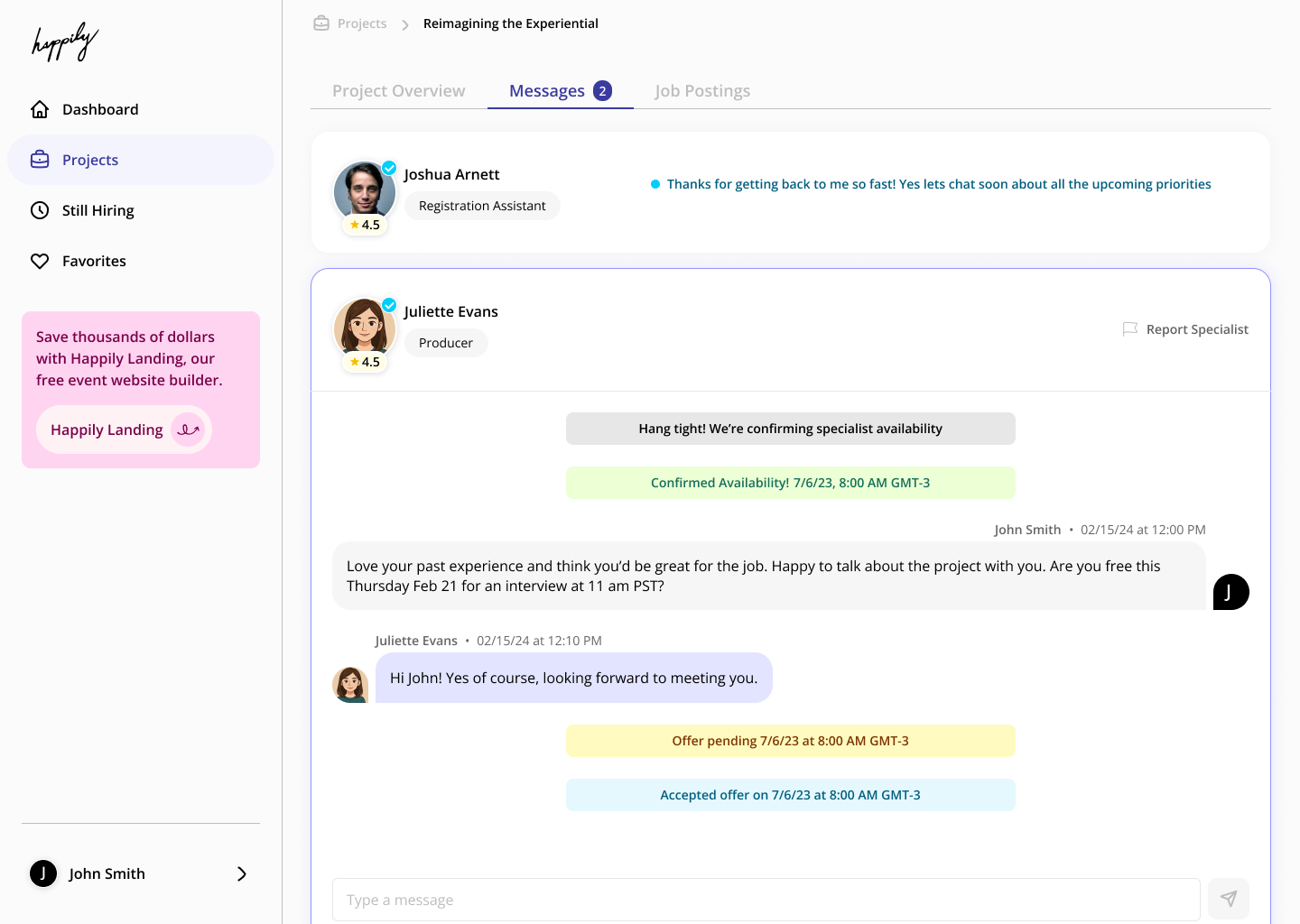
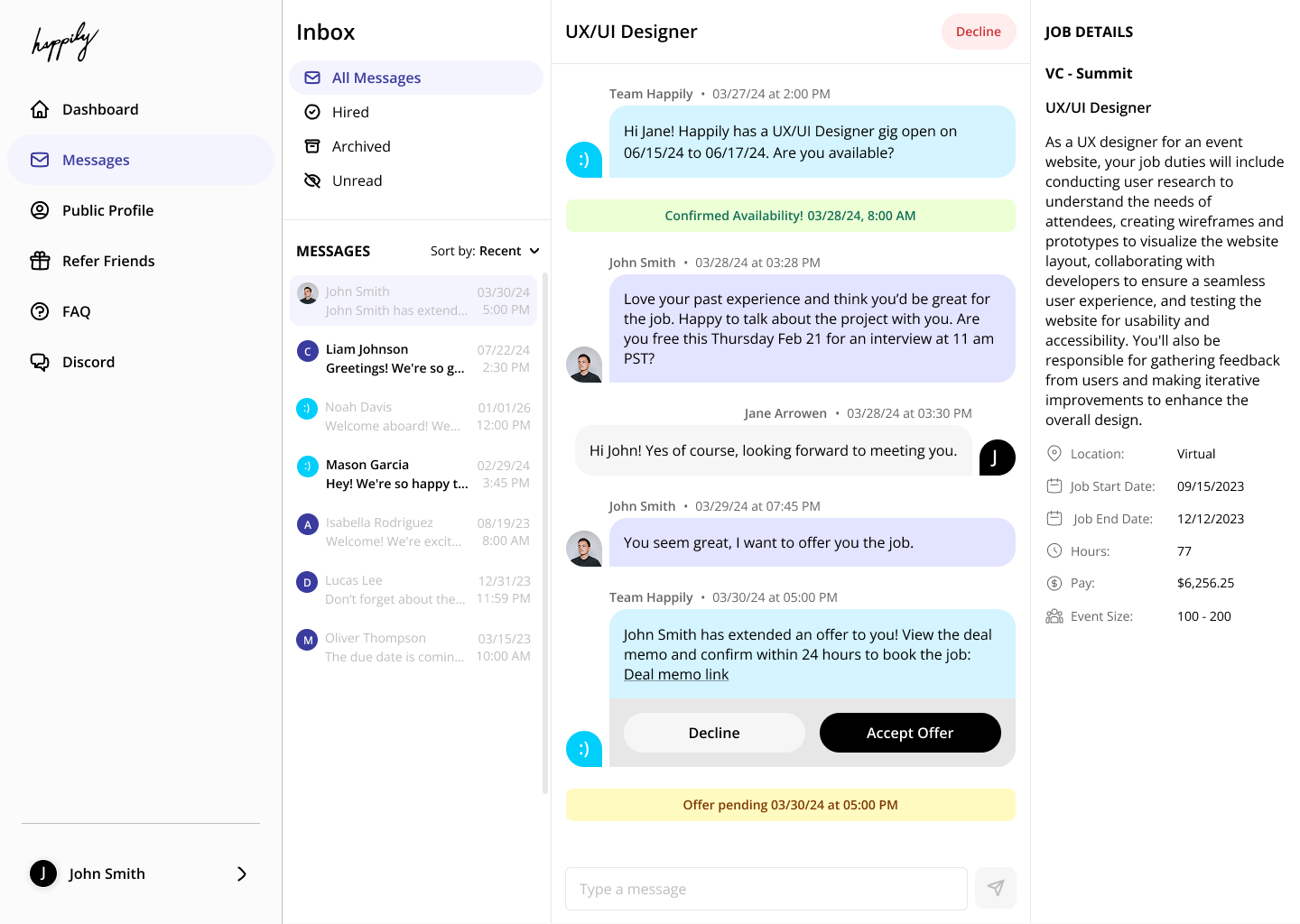
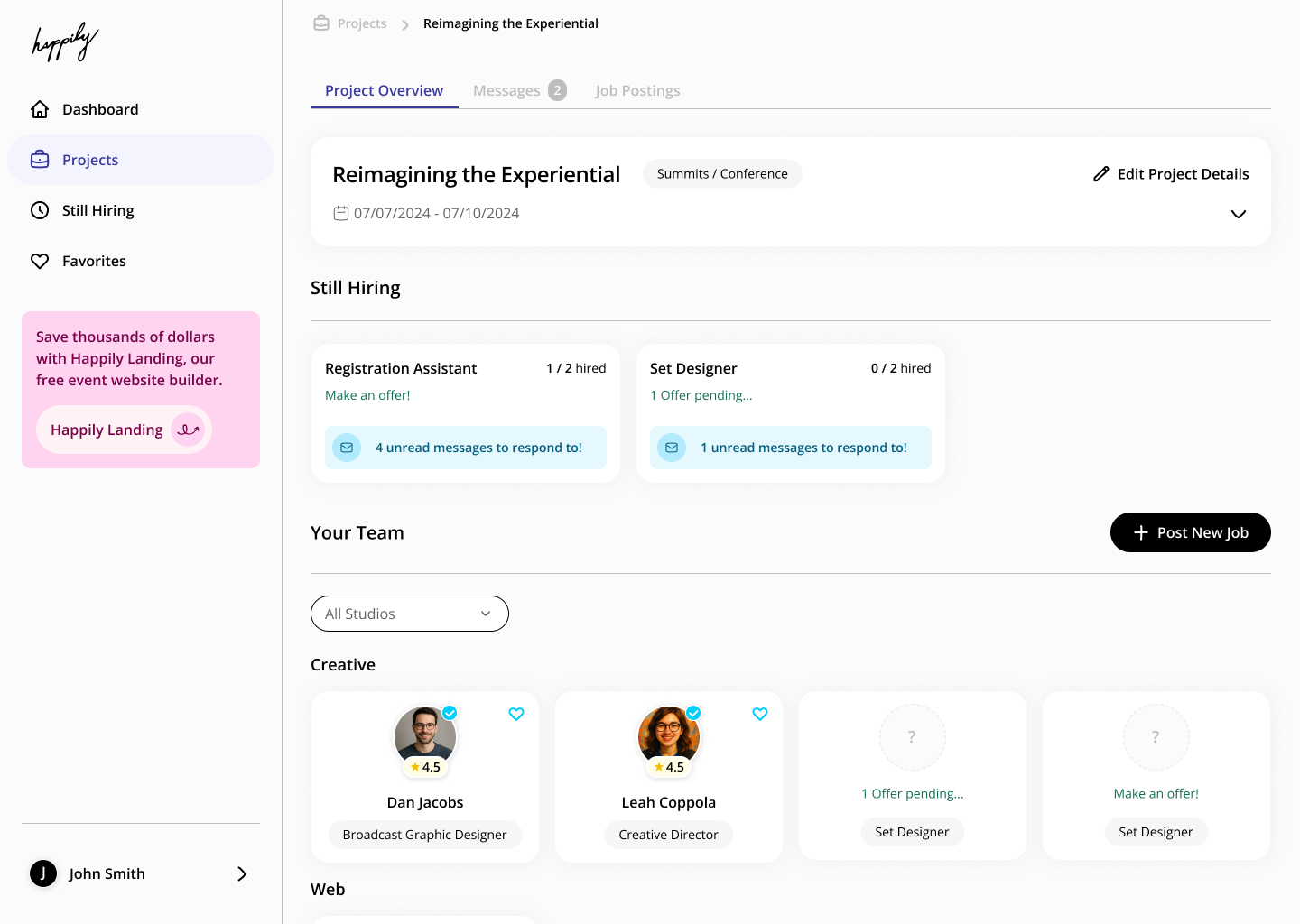
- Unified Hiring Flow
- Consolidated messaging, offers, and contracts into a single, streamlined tab.
- Allows clients to manage their hiring process without jumping between multiple sections.
Why This Decision Was Made:
The fragmented flow made it difficult for users to confidently move from browsing to hiring. By creating a unified workspace, we eliminated silos and gave users a clear, focused area to manage hiring—boosting confidence, reducing friction, and improving conversion.
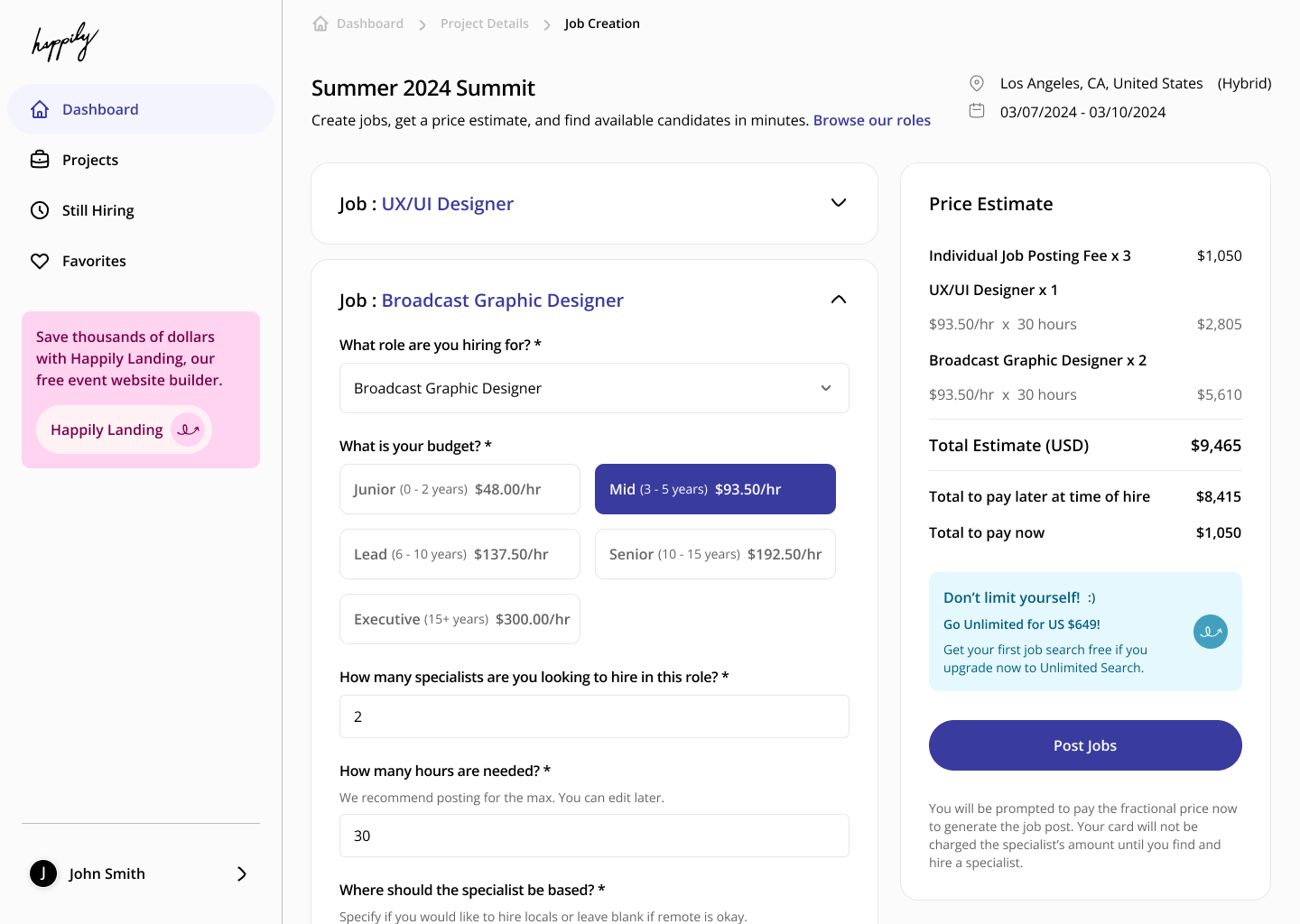
- Role Suggestions Based on Project Type
- Client selects a project type, we display suggested roles commonly hired for that type.
- Clicking a suggestion auto-fills the job form with relevant defaults, while still allowing full customization.
Why This Decision Was Made:
Clients—especially first-timers—often weren’t sure which roles to post for their event. Testing showed this was a key blocker that delayed job creation. By recommending role types up front and pre-filling form fields, we lowered the barrier to action and helped clients feel more confident and guided.
Project Impact
Faster Time to Hire
- Unified flows and smart defaults reduced friction in onboarding and posting jobs
Scalability
- Created the base architecture that supports internal tooling (admin view, payments, messaging) and future client features
Next Steps
As this is an MVP, our current focus is on validating core assumptions and continuing to test the platform’s workflows before moving into experience optimization and broader scalability efforts.

Tracking User Behavior:
Reviewing usage metrics and user feedback to spot trends, surface pain points, and guide future improvements.

Hiring Collaboration Features:
Once gaining traction, the next phase focuses on deepening client engagement, refining collaboration tools, and better surfacing talent data.

Specialist Support:
Upgrading specialist filters by adding smarter sort and AI-based recommendations using engagement and job fit metrics.
Takeaways
Trust-building UX is Crucial
- Clients need visible vetting, ratings, and responsiveness cues before engaging with talent
Too Many Options Can Backfire
- Curated role suggestions and smart defaults helped clients overcome indecision and friction
Clear Expectations Reduce Miscommunication
- Clients who better understood deal terms and hiring steps had fewer questions
Back to top

Thanks for stopping by, want to get in touch?
I’d love to chat and connect with you!

© Made with 💚+ 🍵︎ by Sarah Tomaszewski 2025
Home
About
Resume
Happily
- B2B
Event Marketplace Experience
Launching the client facing platform, creates a streamlined marketplace experience for hiring top-tier event production freelancers. The focus was on intuitive navigation, clear communication, and showcasing specialist profiles in a way that builds trust and simplifies hiring.
ROLE
Product Designer
DURATION
1 month (research to shipped)

The Problem
How might we streamline the hiring experience for clients so they can confidently find, assess, and book event specialists—whether it’s their first time or their fiftieth??
Happily’s agency have been hiring freelancers for their client’s events, with a lot of back and forth, that hiring for live events became fast-paced and high stakes. Event producers or clients themselves needed a way to:
- Quickly browse and filter vetted talent
- Understand specialists’ skills and availability at a glance
- Maintain clear, consistent communication throughout onboarding
The Solution
The Appily platform empowers event personale by:
- Making specialist profiles easy to compare and filter
- Offering real-time messaging and hiring tools in one dashboard
- Elevating trust with reviews, experience tags, and availability indicators
Research & Discovery

Jordan Whitaker
Senior Producer
“I need someone reliable and fast. But finding that person shouldn’t take days.”

Evett Rue
Event Director
“I don’t want to use email and Slack and Calendly—I just want one place to manage my people.”
THE GOAL
This research shaped the the focus of the MVP to have streamline hiring with transparency and built-in trust.
Design Process
These high-fidelity wireframes underwent multiple iterations informed by usability testing and internal reviews. Prior to this stage, the process included stakeholder interviews to uncover key business opportunities, user interviews to deeply understand hiring needs and current workflows, and the development of journey maps, user flows, and low-fidelity sketches. We also incorporated competitive analysis and accessibility considerations to ensure the feature aligns with both user expectations and broader product goals.
Challenges & Constraints
- Balancing the Hiring Styles of Different Users
- Challenge: Designing a hiring flow that works for both repeat and one-time users.
- Solution: We addressed this creating a flexible flow with shortcuts for return users and clearer onboarding for first-timers.
- Prioritization of Key Information
- Challenge: Producers often need to hire a handful of freelancers, fast and need a good assestment at first glance. We needed to balance the specialists’ visibility with client’s needs because too much information can be overwhelming and lead to abandonment.
- Solution: Prioritized key details (skills, availability, reviews) with progressive disclosure—allowing users to dive deeper only when needed.
- Time and Resource Constraints
- Challenge: With a tight timeline for Phase 1 testing, we had to prioritize core functionalities while leaving some features for future iterations.
- Solution: We conducted usability tests with realistic tasks to identify the must-have features for launch, ensuring the platform delivered immediate value.
Testings & Iterations
Part I - Testing with Producers & Cliente
Trust signals (like reviews, verified badges, and shared past events) helped drive hiring decisions
Messaging clarity was critical because they needed to know when and how to communicate with a specialist without awkward delays
Part II - testing with Specialists
Felt anxious about response time expectations — unclear client behavior led to uncertainty after expressing interest
Design Decisions & Considerations
- Unified Hiring Flow
- Consolidated messaging, offers, and contracts into a single, streamlined tab.
- Allows clients to manage their hiring process without jumping between multiple sections.
Why This Decision Was Made:
The fragmented flow made it difficult for users to confidently move from browsing to hiring. By creating a unified workspace, we eliminated silos and gave users a clear, focused area to manage hiring—boosting confidence, reducing friction, and improving conversion.
- Role Suggestions Based on Project Type
- Client selects a project type, we display suggested roles commonly hired for that type.
- Clicking a suggestion auto-fills the job form with relevant defaults, while still allowing full customization.
Why This Decision Was Made:
Clients—especially first-timers—often weren’t sure which roles to post for their event. Testing showed this was a key blocker that delayed job creation. By recommending role types up front and pre-filling form fields, we lowered the barrier to action and helped clients feel more confident and guided.
Project Impact
Faster Time to Hire
- Unified flows and smart defaults reduced friction in onboarding and posting jobs
Scalability
- Created the base architecture that supports internal tooling (admin view, payments, messaging) and future client features
Next Steps
As this is an MVP, our current focus is on validating core assumptions and continuing to test the platform’s workflows before moving into experience optimization and broader scalability efforts.
Tracking User Behavior:
Reviewing usage metrics and user feedback to spot trends, surface pain points, and guide future improvements.

Hiring Collaboration Features:
Once gaining traction, the next phase focuses on deepening client engagement, refining collaboration tools, and better surfacing talent data.

Specialist Support:
Upgrading specialist filters by adding smarter sort and AI-based recommendations using engagement and job fit metrics.
Takeaways
Trust-building UX is Crucial
- Clients need visible vetting, ratings, and responsiveness cues before engaging with talent
Too Many Options Can Backfire
- Curated role suggestions and smart defaults helped clients overcome indecision and friction
Clear Expectations Reduce Miscommunication
- Clients who better understood deal terms and hiring steps had fewer questions
Back to top

Thanks for stopping by, want to get in touch?
I’d love to chat and connect with you!
© Made with 💚+ 🍵︎ by Sarah Tomaszewski 2025
Home
About
Resume
Happily
- B2B
Event Marketplace Experience
Launching the client facing platform, creates a streamlined marketplace experience for hiring top-tier event production freelancers. The focus was on intuitive navigation, clear communication, and showcasing specialist profiles in a way that builds trust and simplifies hiring.
ROLE
Product Designer
DURATION
1 month (research to shipped)

The Problem
How might we streamline the hiring experience for clients so they can confidently find, assess, and book event specialists—whether it’s their first time or their fiftieth??
Happily’s agency have been hiring freelancers for their client’s events, with a lot of back and forth, that hiring for live events became fast-paced and high stakes. Event producers or clients themselves needed a way to:
- Quickly browse and filter vetted talent
- Understand specialists’ skills and availability at a glance
- Maintain clear, consistent communication throughout onboarding
The Solution
The Appily platform empowers event personale by:
- Making specialist profiles easy to compare and filter
- Offering real-time messaging and hiring tools in one dashboard
- Elevating trust with reviews, experience tags, and availability indicators
Research & Discovery
Jordan Whitaker
Senior Producer
“I need someone reliable and fast. But finding that person shouldn’t take days.”
Evett Rue
Event Director
“I don’t want to use email and Slack and Calendly—I just want one place to manage my people.”
THE GOAL
This research shaped the the focus of the MVP to have streamline hiring with transparency and built-in trust.
Design Process
These high-fidelity wireframes underwent multiple iterations informed by usability testing and internal reviews. Prior to this stage, the process included stakeholder interviews to uncover key business opportunities, user interviews to deeply understand hiring needs and current workflows, and the development of journey maps, user flows, and low-fidelity sketches. We also incorporated competitive analysis and accessibility considerations to ensure the feature aligns with both user expectations and broader product goals.
Challenges & Constraints
- Balancing the Hiring Styles of Different Users
- Challenge: Designing a hiring flow that works for both repeat and one-time users.
- Solution: We addressed this creating a flexible flow with shortcuts for return users and clearer onboarding for first-timers.
- Prioritization of Key Information
- Challenge: Producers often need to hire a handful of freelancers, fast and need a good assestment at first glance. We needed to balance the specialists’ visibility with client’s needs because too much information can be overwhelming and lead to abandonment.
- Solution: Prioritized key details (skills, availability, reviews) with progressive disclosure—allowing users to dive deeper only when needed.
- Time and Resource Constraints
- Challenge: With a tight timeline for Phase 1 testing, we had to prioritize core functionalities while leaving some features for future iterations.
- Solution: We conducted usability tests with realistic tasks to identify the must-have features for launch, ensuring the platform delivered immediate value.
Testings & Iterations
Part I - Testing with Producers & Cliente
Trust signals (like reviews, verified badges, and shared past events) helped drive hiring decisions
Messaging clarity was critical because they needed to know when and how to communicate with a specialist without awkward delays
Part II - testing with Specialists
Felt anxious about response time expectations — unclear client behavior led to uncertainty after expressing interest
Design Decisions & Considerations
- Unified Hiring Flow
- Consolidated messaging, offers, and contracts into a single, streamlined tab.
- Allows clients to manage their hiring process without jumping between multiple sections.
Why This Decision Was Made:
The fragmented flow made it difficult for users to confidently move from browsing to hiring. By creating a unified workspace, we eliminated silos and gave users a clear, focused area to manage hiring—boosting confidence, reducing friction, and improving conversion.
- Role Suggestions Based on Project Type
- Client selects a project type, we display suggested roles commonly hired for that type.
- Clicking a suggestion auto-fills the job form with relevant defaults, while still allowing full customization.
Why This Decision Was Made:
Clients—especially first-timers—often weren’t sure which roles to post for their event. Testing showed this was a key blocker that delayed job creation. By recommending role types up front and pre-filling form fields, we lowered the barrier to action and helped clients feel more confident and guided.
Project Impact
Faster Time to Hire
- Unified flows and smart defaults reduced friction in onboarding and posting jobs
Scalability
- Created the base architecture that supports internal tooling (admin view, payments, messaging) and future client features
Next Steps
As this is an MVP, our current focus is on validating core assumptions and continuing to test the platform’s workflows before moving into experience optimization and broader scalability efforts.
Tracking User Behavior:
Reviewing usage metrics and user feedback to spot trends, surface pain points, and guide future improvements.

Hiring Collaboration Features:
Once gaining traction, the next phase focuses on deepening client engagement, refining collaboration tools, and better surfacing talent data.

Specialist Support:
Upgrading specialist filters by adding smarter sort and AI-based recommendations using engagement and job fit metrics.
Takeaways
Trust-building UX is Crucial
- Clients need visible vetting, ratings, and responsiveness cues before engaging with talent
Too Many Options Can Backfire
- Curated role suggestions and smart defaults helped clients overcome indecision and friction
Clear Expectations Reduce Miscommunication
- Clients who better understood deal terms and hiring steps had fewer questions
Thanks for stopping by, want to get in touch?
I’d love to chat and connect with you!
Back to top

© Made with 💚+ 🍵︎ by Sarah Tomaszewski 2025